“Caritas Poland helped me, and now I am helping others.” These are the words of Garabet Avedissian, who comes from Aleppo and now works as a Donor Relations Manager for the Family to Family programme in Syria. He shares his personal story and explains how the programme is helping Syrians overcome the lasting effects of war and the country’s ongoing economic crisis.
Ten years ago, when the Family to Family programme was launched by Caritas Poland, Garabet was among its beneficiaries. He recalls that at the time, Aleppo, the city where he was born and has lived all his life, was engulfed in war. Bombings were frequent, and people struggled with severe shortages of even the most basic necessities, including food, clothing and electricity.
Garabet was a university student at the time. As his mother was a widow raising her children on her own, the family qualified for assistance through the Family to Family programme.
“I remember very clearly that every month we received financial support through Caritas and the Church. Thanks to that assistance, I was able to complete my studies. And now I am one of the managers of the very same Family to Family programme,” says Garabet.
The war may be over, but the hardship remains
Garabet points out that although Syria has entered a new chapter following the fall of the previous authorities, the crisis is far from over. The country is safer, but the lives of millions of Syrian families have yet to improve.
“Many families cannot afford to meet even their children’s most basic needs. As a result, many young people who get married decide not to have children because they believe they simply cannot afford to raise them. Others are afraid to start a family for the same reason. Everyone, especially young people, is living with enormous uncertainty,” Garabet explains, stressing that humanitarian assistance remains essential.
“When we come together and work collectively to help others, we know that God is on our side,” says Garabet. (Family to Family)
Stability is what matters most
As Garabet explains, the programme provides different forms of assistance depending on people’s needs.
“We primarily provide cash assistance to older people, people with disabilities and widows. For young people, the Family to Family programme offers microgrants to help them start their own businesses. We want to help them regain a sense of stability. We want them to be able to work in Syria, in their hometowns, and take their future into their own hands by building a sustainable source of income.”
“So far, we have supported thousands of small business ventures across Syria. They are genuinely changing people’s lives. That is why we are so deeply grateful for Caritas Poland’s support, for your help and for the commitment of all our donors,” he adds.
A flock of sheep offers a fresh start
Garabet recalls the story of a young man who returned to Idlib after the war, only to find his home reduced to rubble. He received assistance in the form of a flock of sheep. Today, he is raising livestock and gradually rebuilding his life.
“He showed us his sheep and said: ‘Well, I’m back now. This is my farm. This is my family’s farm. I will work. I will rebuild my house. I will get married and have children here.’”
Our work is God’s work
Reflecting on his experience, Garabet says that helping others also has a profound impact on those who provide assistance.
“Every time we come together as a group to help other people and see the results of our work, something changes deep within our hearts.”
“I also remember the words of our director: ‘What we do in Syria is not just humanitarian work. It is God’s work, which we carry out to support our communities.’ When we come together and work collectively to help others, we know that God is on our side. That is why we never lose hope,” he emphasises.
Garabet Avedissian was among the participants in the Charity Forum organised by Caritas Poland in Warsaw. The event brought together donors, sponsors, staff members and friends of Poland’s largest Catholic charitable organisation.
By Family News Service / Piotr Kowalczuk
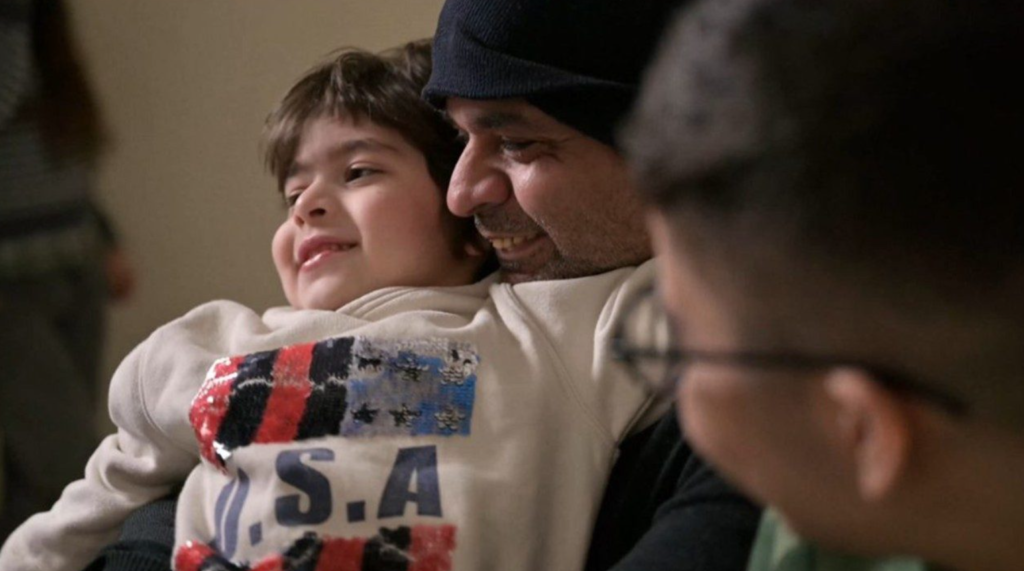
Photo by Rodzina Rodzinie