More than 388 million Christians worldwide face severe persecution or discrimination because of their faith. In the Middle East, Christian communities are steadily shrinking as conflict, extremism and poverty force people to leave their homes. For the past decade, Caritas Poland’s Family to Family program has been helping families remain self-reliant and rebuild their lives. Since its launch, the program has supported around 60,000 families and more than 2,000 small family businesses.
From Emergency Aid to Self-Reliance
The Family to Family program was launched in 2016 in response to the humanitarian catastrophe caused by the war in Syria. Its original concept was simple: one family in Poland would support a specific family in Syria.
As the number of people in need grew, so did the program. It eventually expanded beyond Syria to Lebanon, Palestine and Ukraine, prompting Caritas Poland to develop a broader model of long-term, systemic support.
In 2018, the program took another important step by introducing assistance for micro-enterprises. Rather than providing families with short-term relief alone, Caritas began helping them establish or expand small businesses capable of generating a sustainable income. The aim was not only to help families meet their basic needs, but also to restore their independence, dignity and sense of control over their own lives.
The Gaza Strip was incorporated into the program in 2020. Following the outbreak of war in October 2023, however, the humanitarian situation deteriorated dramatically. Assistance there has increasingly focused on saving lives through direct financial transfers. In the West Bank, meanwhile, unemployment has emerged as one of the most pressing challenges, making support for small businesses particularly important.
Lebanon joined the program in 2021, following years of economic crisis and the devastating explosion at the Port of Beirut in 2020. After Russia’s full-scale invasion of Ukraine, the program was also expanded to support large families, people with disabilities, single mothers and internally displaced people.
Different Forms of Aid, One Goal
The Family to Family program is built around two main pillars: direct financial assistance and support for entrepreneurship.
Cash assistance gives families something that humanitarian aid often cannot: the freedom to decide what they need most. Beneficiaries can use the funds for rent, heating, food, medicine or other essential expenses, setting their own priorities and making decisions for themselves.
The approach also benefits local economies. Rather than distributing large quantities of donated goods, financial assistance allows people to buy what they need locally, keeping money within their communities. It also reduces the substantial costs associated with transporting and distributing material aid.
Support for micro-enterprises, meanwhile, provides families with a pathway toward long-term self-reliance. The results are particularly encouraging in Syria, where 86% of the small family businesses supported through the program continue to operate. In the West Bank, many supported businesses have gone a step further, creating additional jobs and providing employment for other members of the local community.
Small businesses can also have an impact that goes beyond economics. In many parts of the Middle East, services and businesses operate within specific religious communities. Supporting local entrepreneurs can therefore help strengthen social ties and preserve the institutions and networks that hold Christian communities together.
Rineh and Jack: Two Stories of Resilience
Among the beneficiaries of the program is Rineh, who lives in the Bethlehem area. A mother of six and the sole breadwinner in her family, she became the first woman in her area to take the risk of starting her own business. Her husband is unable to work because of his health, leaving Rineh responsible for supporting the household.
She produces and sells goat-milk products. With support from Caritas Poland, she was able to expand her herd and develop her farm. Her story illustrates how relatively modest support can give a family the opportunity to build a more secure future.
Jack’s story began in Syria. Forced to leave his country because of the war, he found work in an Italian restaurant in Lebanon. After returning home, he decided to start a business of his own. With support from donors participating in the Family to Family program, Jack and his friend Joseph opened a dessert café in Aleppo.
For both Rineh and Jack, assistance was more than emergency relief. It gave them the means to become economically independent and to shape their own futures.
Supporting Communities Under Pressure
In Syria, Lebanon and the West Bank, the Family to Family program has become an important tool in the fight against poverty and the decline of Christian communities.
In Syria, 97% of the families supported by Caritas Poland are Christian. In Lebanon, Christians account for 86% of beneficiaries, while in the West Bank, the figure reaches 100%.
After ten years, the program has evolved far beyond its original model of one family helping another. It has become a long-term response to humanitarian crises—one that combines immediate assistance with opportunities for people to rebuild their livelihoods, regain their independence and remain rooted in their communities.
Family News Service / Piotr Kowalczuk
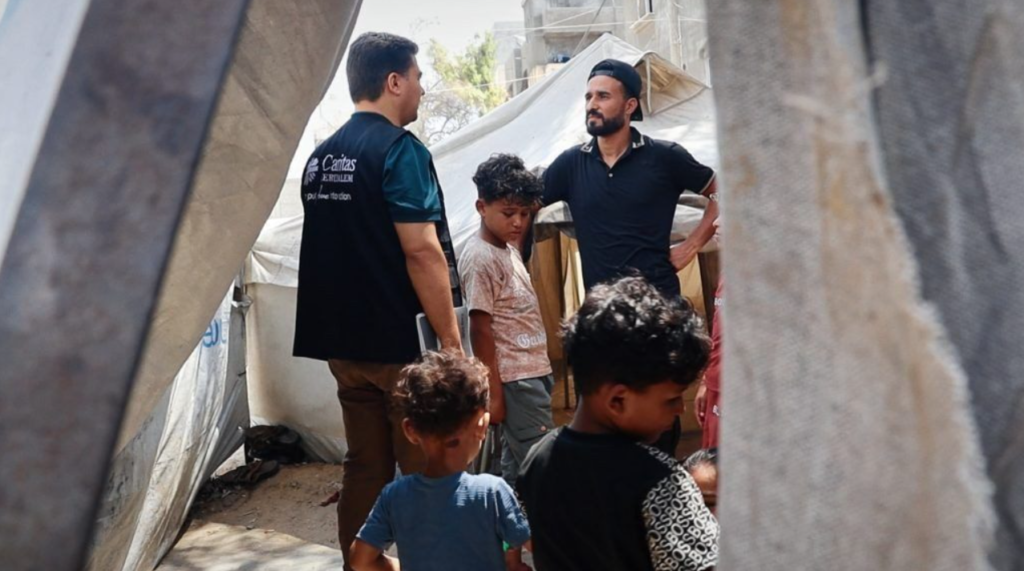
Photo by Vatican Media