Food shortages, medicine shortages, power cuts and a lack of fuel are pushing many Cubans deeper into hardship. In Santiago de Cuba, growing numbers of children, elderly people, the sick and those without homes are turning to parish aid for food. Some are even searching through garbage for something to eat.
At the San Antonio María Claret parish, a soup kitchen run by Polish missionary Father Adam Czerwiński and supported by Caritas Poland has become a lifeline for people struggling to survive. It is also emerging as a place where those facing poverty and isolation can find a sense of community. “I’ve been serving in Cuba for five years, and I have never seen things this bad,” – says Father Czerwinski.
A daily struggle to survive
Cuba is facing one of its worst economic crises in decades. Food, medicine and basic hygiene products are increasingly difficult to obtain, while shortages of electricity and fuel are making everyday life even harder. “Daily life in Cuba has become a struggle for survival, just to get one meal a day,” the priest said. Frequent power outages make it difficult to cook and store food, which can quickly spoil in the island’s high temperatures. Fuel shortages have also brought transportation to a near standstill, making it harder for people to get to work and for food and other essential goods to reach communities. At the same time, prices continue to rise, leaving many families unable to afford even basic necessities. The crisis is also taking a psychological toll. Father Czerwinski says he is seeing increasing levels of exhaustion and a growing loss of hope. Thousands of Cubans are leaving the island, often leaving families divided. The priest acknowledges that he cannot help everyone. “I try, as much as possible, to make sure that no one leaves my home or my parish empty-handed, especially if they are suffering from severe hunger,” – he said.
Money is not enough
Even when people have money, finding basic goods can be difficult. “You can sometimes have money, but it is hard to find anything to buy,” Father Czerwinski said. He purchases food in dollar stores and local markets, while medicines and hygiene products are brought in from Poland. Securing cooking gas has proved particularly difficult: he has been trying unsuccessfully to obtain it for five months.
A meal — and a place to belong
One of the parish’s main responses to the worsening crisis is the “Kitchen for the Needy” project, which is operating from April through November 2026. Every Saturday, children from the San Antonio María Claret parish community receive a nutritious breakfast. Around 90 adults are provided with three meals a week. The kitchen also assists sick people, those without homes and people living alone. Volunteers play a crucial role. They help purchase ingredients, prepare meals and deliver food to people who are sick or unable to leave their homes. “I cannot even imagine my ministry here in Cuba without their presence. They are my helping hand,” Father Czerwinski said.
Caritas support and a message of hope
Financial and material support from Caritas Poland enables the parish kitchen to continue operating and helps cover the cost of food, medicines and hygiene products. But Father Czerwinski expects the need for assistance to grow in the coming months, not only for food and other basic necessities but also for psychological and spiritual support. During his five years in Cuba, the priest says he has repeatedly witnessed the generosity of people willing to help those in need. “God always sends good people with sensitive and beautiful hearts, people who want to share and help those whom life has not spared,” he said.
For the parish, the kitchen is about more than putting food on the table. It is also an effort to restore dignity and give people the confidence to regain control over their lives. “Thanks to this, people are regaining their spirit, their ánimo, as Cubans say — their joy of living,” Father Czerwiński said. In a country struggling with shortages and uncertainty, the parish is seeking to turn faith into practical solidarity. “Here in Cuba, we transform the Gospel into concrete life, into concrete action,” the priest said.
Father Adam Czerwiński says:
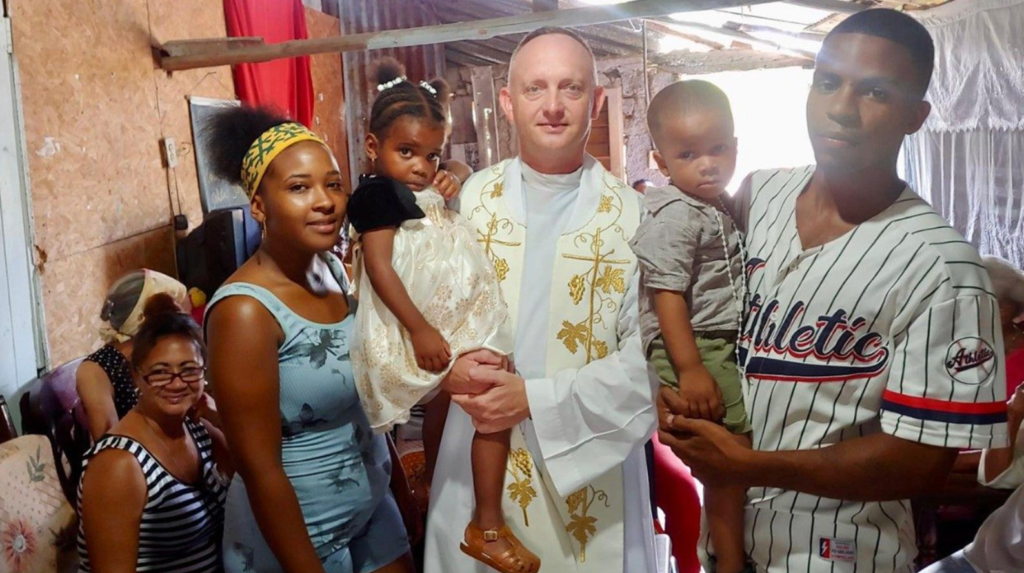
Fr. Czerwiński with his community in Cuba, photo credit: private archive
Karol Darmoros, Piotr Kowalczuk, vaticannews.va/pl