Poverty, insecurity and displacement are placing a heavy burden on communities in Burkina Faso. Through parish initiatives supported by Caritas Poland, the Church is helping displaced people and vulnerable families find practical ways to rebuild their lives and regain hope.
In Burkina Faso, where violence has forced thousands of people to leave their homes and large areas of the country remain beyond the control of the State, the Church continues to accompany those most affected by the crisis. Among them are families struggling to meet their most basic needs and children whose education has been interrupted by poverty or insecurity. “Every bit of help is important and necessary,” says Father Dariusz Sala, SAC, pastor of St Faustina Parish in Ouagadougou, speaking to Vatican News.
A country marked by insecurity
Father Sala has been serving in Burkina Faso since 2018. He describes a country facing a worsening humanitarian and security situation. Burkina Faso has experienced a series of coups and has been under military rule for the past four years. At the same time, attacks by jihadist groups continue to force people from their homes and disrupt access to essential services. According to Father Sala, around one-third of the country is now considered a “red zone”. “No one can enter. Not even the state has control over this part of the country,” he says. Schools and health centres have also been forced to close in areas affected by armed groups, leaving many communities without access to education and healthcare. Poverty further deepens the crisis. Father Sala says that only 46 per cent of children attend school, while around 80 per cent of the population depends on agriculture for its livelihood.
Father Dariusz Sala says:
Giving families the means to stand on their own
In response to these challenges, St Faustina Parish, with the support of Caritas Poland, has launched a project aimed at helping vulnerable families generate their own income. Thirty poor families each received 18 hens and two roosters, together with training, vaccines and feed. The poultry-breeding initiative is intended to provide families with a sustainable source of income, enabling them to meet everyday needs and contribute to their children’s education. The goal is not simply to provide assistance, but to give families the means to support themselves through their own work. For Father Sala, this kind of support can make a lasting difference, particularly in communities where opportunities are scarce and uncertainty about the future is widespread.
Welcoming those displaced by violence
Caritas Poland is also supporting the Archdiocese of Ouagadougou and local Caritas initiatives. One of the programmes carried out in Father Sala’s parish has focused on helping internally displaced people integrate into the communities where they have sought refuge. Local residents are prepared to welcome displaced families, while food and medicines are provided to those in need. Some internally displaced people arrive from villages as far as 400 kilometres away. Their journeys can last several days, and children may have little or no food along the way. “Many of these people arrive with nothing,” Father Sala says. For the Church, accompanying them means responding not only to their material needs, but also helping them recover a sense of dignity, welcome and belonging.
A place to pray together
With the support of the Pallottine Missionary Secretariat, the parish also organises Samaritan Day, bringing displaced people and members of the local community together for prayer and a shared meal. Cleaning supplies are also distributed. Father Sala notes that Muslims often outnumber Catholics in the camps. “We pray together. We build this communion with them,” he says.
In this way, the Church’s presence becomes a sign of closeness to people regardless of their religious background. For the missionary, providing assistance is also an opportunity to show displaced families that they have not been forgotten and that they are welcome in their new communities.
Education opens a door to the future
Alongside emergency assistance and livelihood projects, the Pallottines are investing in education.
Through the Heart Adoption programme, around 800 children receive material and spiritual support.
Father Sala recalls the story of a student who was forced to interrupt his education shortly before completing high school after his father fell ill. With the help provided through the programme, the young man was able to resume his studies, graduate and pass his final examinations.
He now hopes to become a priest.
“This kind of help changes a person’s life because it gives them a perspective for the future,” Father Sala says.
In Burkina Faso, where violence and poverty continue to limit opportunities for so many families, such initiatives offer more than immediate relief. They seek to restore the possibility of a future — one in which families can work, children can study and communities can rebuild their lives with dignity and hope.
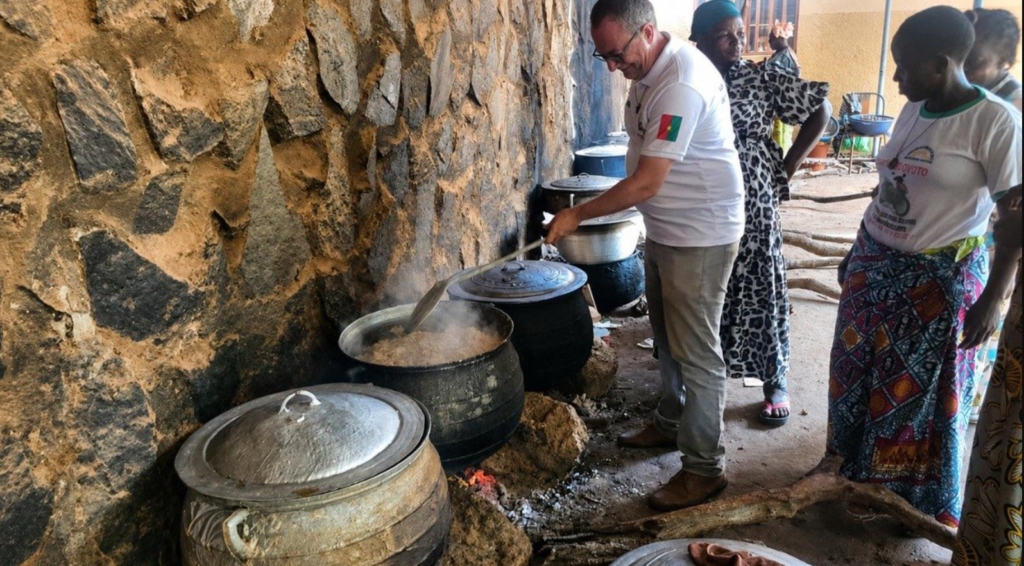
Fr. Sala has been working in Burkina Faso since 2018, photo credit: Fr. Dariusz Sala, SAC